There is a long history of talking about the Ladder of Success in Imperial China, and if the Chinese bureaucracy really was a Career Open to Talent. This was also one of the few topics where you had enough data to actually do some vaguely social science type stuff, which made it a very popular topic for a long time.
If you want a nice summary of a lot of this literature you can look at “Kin Networks and Exam Degree Attainment in 19th Century China: An Analysis Based on Tongnianchilu” by Cameron Campbell, Qin XUE, Shengbin WEI Preprint available here
They also answer the question. 🙂 Specifically, the question Ho Ping-ti asked a long time ago. How many exam passers were “new men”, from families that did not have a history of exam passing?
With modern methods you can get better data. The authors tell us that the Tongnian Chilu (同年齒錄) and Mingjing Tongpu (明經通譜). contain self-reported information for 950,927 relatives of 34,313 19th century degree holders.
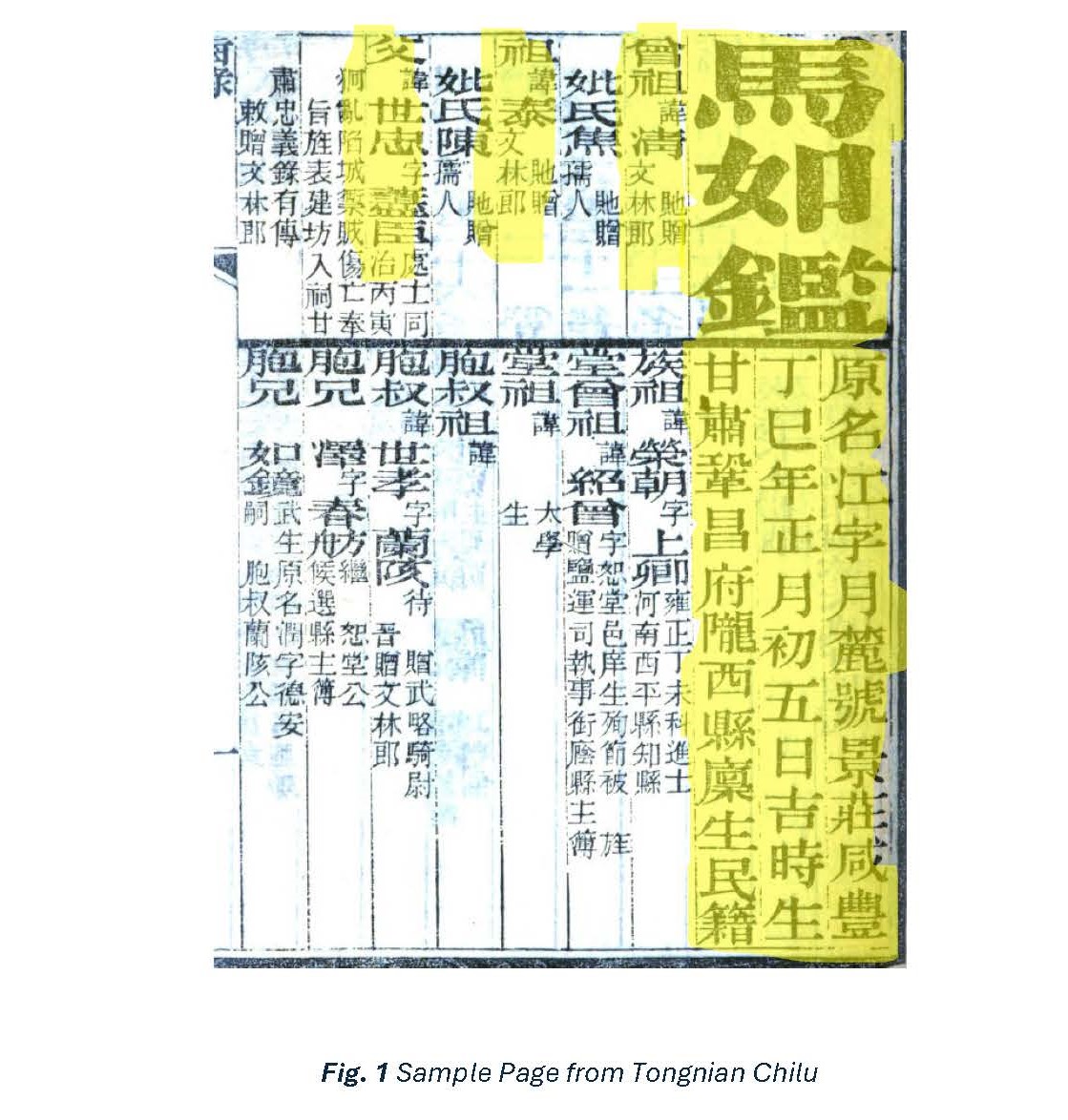
If you1 code in all the data you can get pretty good statistics on how many exam passers had relatives who passed the exams. Ready? Here it is.
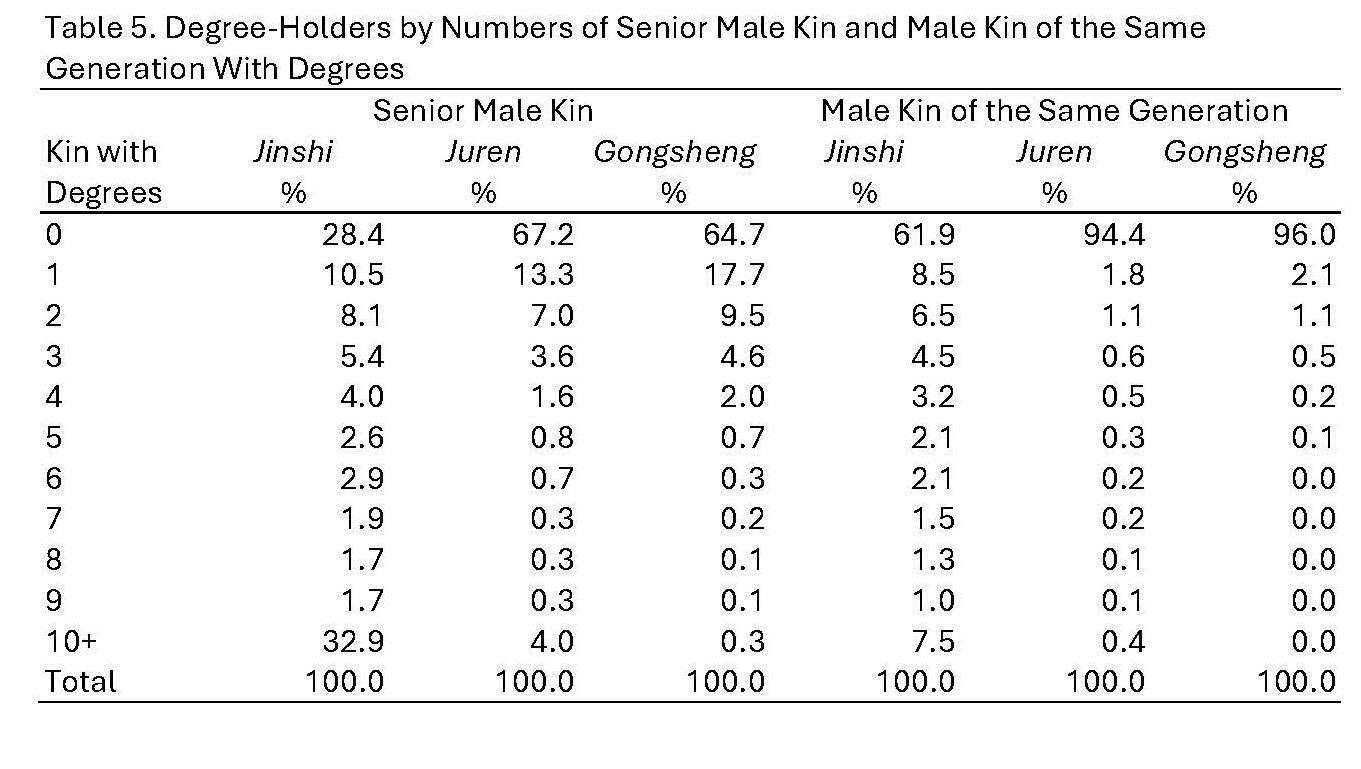
As you can see, the Jinshi (which was the degree you really needed to get a job and have a career at this point) group reported only 28.4 % without any kin with degrees2 This is less than the 32.9% who had 10 or more relatives with degrees.(It is not clear to me if they count relatives who had purchased a degree, although given that the data is self-reported I would guess that they are all treated the same. )
The Juren (who might get a job) and Gongsheng (future schoolteachers) report radically different numbers. So this seems a pretty clear set of evidence that the lower ranks of exam passers had men from “lower” families, but at the top those with ink in their veins predominated.
Now just add some stuff on buying degrees, and you are all set to teach about this.
https://osf.io/preprints/socarxiv/s2u3w_v1
