Reflecting on “Giants”

Todd Crowell reports that Kim Dae Jung is seriously ill and reflects on his life and career as a “Giant of [Asian] Democracy”

For Kim achieving the presidency was the culmination of a lifelong struggle. After two unsuccessful attempts, he won his first seat in parliament in 1961, only to find the National Assembly building surrounded by tanks in the military coup that brought Park Chung Hee to power three days later. In 1971 he made the first of four bids for president — running against Park himself.

He engendered Park’s undying enmity by winning as much as 46 per cent of the vote. In that first presidential campaign he was hit by a car, perhaps deliberately, and suffered an injury that made him walk with a shuffle for the rest of his life.

In 1973 he was abducted by agents of the Korea Central Intelligence Agency (KCIA) in Japan and brought back to South Korea forcefully. His political rights were restored shortly only after Park’s assassination in 1979. A year later Kim was accused of treason after students and residents of the southwestern city of Kwangju rose in a bloody insurrection.

In all, Kim spent five years in prison, seven under house arrests and two years in exile in the United States. Returning to Korea in 1985, he and his supporters had Aquino’s assassination two years previously strongly in mind. A couple of U.S. congressmen accompanied him to discourage any “copy cat” killings.

In the 1997 election Kim Dae Jung proved he was not only courageous but could also be shrewd, practical, even ruthless when he had to be. His comeback, which marked the first peaceful transfer of power from a ruling to an opposition party in South Korea’s history, was a masterpiece of political manipulation.

He made an alliance of convenience with the conservative Kim Jong Pil, the very man who had masterminded the coup that prevented him from taking his assembly seat more than 30 years before and the founder of the KCIA, the agency that had tried to kidnap him.

He leaked allegations that the sons of his main opponent, Lee Hoi Chang, had avoided military service. These revelations, damaging enough to Lee, encouraged the ambitious mayor of Inchon, Rhee In Je, to enter the race, thus splitting the conservative vote and allowing Kim to squeak into power with about 40 percent of the vote.

As president, Kim Dae Jung showed toughness in getting his way with the legislature and Korea’s large business conglomerates, but he also steadfastly held to his vision of reconciliation with North Korea, known as his “sunshine policy.” He was rewarded with the Nobel Prize for Peace for his summit meeting with Kim Jong Il in Pyongyang in 2000.

Some of the luster went off of that achievement when it was later revealed that he had arranged with several large business conglomerates to bribe the North with about $500 million in cash to hold the meeting in Pyongyang. There was personal sadness two when his two sons were accused of corruption.

These days the sun does not shine so brightly on the sunshine policy. A cold wind continues to blow from Pyongyang. The election of conservative Lee Myung Bak as president (another peaceful change of power) reflected growing disillusion in South Korea. Still elements, such as the Kaesong industrial zone across the Demilitarized Zone, remain in place.

I would emphasize something of that last paragraph: the second peaceful transition of power marks a significant step in the creation of a procedurally sound democracy and should be considered a triumph rather than merely a defeat. And the short-term failure of the “Sunshine policy” — and the need to bribe the North Koreans — I’ve always felt that more bribery, rather than less (see also) would produce better results, and I think Kim Dae Jung’s reputation will continue to rise rather than fall as things progress.

Cultural and Physical History Mystery

Okinawa boats taken by T. Egami, 1898 Michelle Damian, who I met at ASPAC, has a new post up in her project journal with an intriguing mystery:

One type of vessel that has intrigued me is the massive yakatabune, boats used for pleasure gatherings on the river. They have a solid superstructure with heavy supporting posts and cross timbers, usually decorated with lanterns bearing the names of the restaurants that had dispatched them, and are often shown with smaller craft alongside used to ferry patrons or cook the food. … What is unusual, though, is the notch at the tip of the stempost. These vessels almost always have an extra protrusion at the end.

If the mystery ended there I could chalk it up to simply the convention for the yakatabune – perhaps just aesthetic, perhaps for whatever reason just an additional visual cue to the boat’s purpose. On a model of a similar ship in Tokyo’s maritime museum (Fune no Kagakukan), though, the stempost is apparently made of two separate pieces of wood scarfed together with a notch exactly like the tip of the stemposts in the prints. It is as though the boats shown in the prints had removed that extra piece of wood, leaving the uneven notch exposed. … If anyone has any thoughts or suggestions to help solve this mystery, I would be most grateful to hear them!

modern-yakatabune

Go to her project journal for the proper illustrations (the ones here are just some that I found on Flickr) and more detail.

My theory? I think the stem, because of its size, was removable. So when it might block the view of patrons, as in a fireworks-viewing trip, it was taken off the vessel, but when it was a pleasure cruise in which the patrons were more focused on the activity inside, it was left on for elegance.

Imperial Visits and Attitudes

I just learned of the Japanese Emperor and Empress’ visit to Hawai’i [via]. It’s not the first time that a member of the Japanese Imperial family has visited the islands, though you would hardly know it from the gushing “historic” reports of the media. Though this is the first visit by Akihito as Emperor, Akihito has visited the islands before, as have other members of Japan’s now-symbolic dynasty. In addition to the Advertiser’s photo gallery, there are some excellent shots on Flickr by “731photo” and “onecardshort”, as well as one picture from the US Pacific Command.1

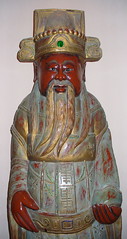
The continuing connection between the Hawai’i Japanese immigrant community and Japan was a matter of strategic concern from the beginning: The Kingdom of Hawai’i wanted to use Japan as a counterweight against US power; the Republic of Hawai’i used the threat of Japan — which was actively concerned about the treatment of Japanese in Hawai’i — to support the annexation of the islands by the US; in the Territorial era, disputes about immigration and about labor organization often involved the Japanese consulate.2 Chinese Old Man Statue 2 And it’s also true that the Japanese government considered Japanese emigrants to be an extension of the nation3 , and tried, in a fairly blunt fashion, to influence foreign opinion through the overseas communities. By the 1910s and 20s, discussion in the media and halls of power of the Hawaiian Japanese community as a potential “fifth column” was pretty common, and that view was also common on the mainland. It took an immigration ban, a war, Japan’s crushing defeat and entry into the US security system, and the “blood sacrifice” of Nikkei serving with distinction in the US military to overcome those fears, and transform the Japanese immigrant community and their descendants into simply “ethnic” Americans. So, a little over twenty years past the end of WWII, fifteen past the end of the US occupation, the centennial of Japanese immigration into Hawai’i could be celebrated with public monuments, publications and events.

This history is why I was so disturbed to read about PRC policy which sees overseas Chinese as intelligence and lobbying agents. There’s a reasonable argument to be made — as Ichioka does — that Japanese government policy towards emigrants gave support to anti-immigrant attitudes in the US and elsewhere. It’s true that other governments treat emigres as resources to some extent, and urge their citizens overseas to represent the nation well, but the level of coordination, and open encouragement distinguishes pre-war Japanese policy and current PRC policy from the rest of the pack. I don’t think we’re on the verge of a “Yellow Peril” panic in the US at this point, but there’s no question that this has lead to serious negative consequences for individuals, and could lead to wider problems in the future.

x-posted


  1. That it’s a better shot of the Admiral than of the Emperor is, I suppose, not surprising.  

  2. See Gary Okihiro, John Stephan, also Morris-Suzuki  

  3. see also  

Imperial Visits and Attitudes

I just learned of the Japanese Emperor and Empress’ visit to Hawai’i [via]. It’s not the first time that a member of the Japanese Imperial family has visited the islands, though you would hardly know it from the gushing “historic” reports of the media. Though this is the first visit by Akihito as Emperor, Akihito has visited the islands before, as have other members of Japan’s now-symbolic dynasty. In addition to the Advertiser’s photo gallery, there are some excellent shots on Flickr by “731photo” and “onecardshort”, as well as one picture from the US Pacific Command.1

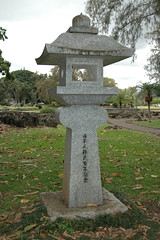
The continuing connection between the Hawai’i Japanese immigrant community and Japan was a matter of strategic concern from the beginning: The Kingdom of Hawai’i wanted to use Japan as a counterweight against US power; the Republic of Hawai’i used the threat of Japan — which was actively concerned about the treatment of Japanese in Hawai’i — to support the annexation of the islands by the US; in the Territorial era, disputes about immigration and about labor organization often involved the Japanese consulate.2 Yamaguchi Prefecture immigration memorial -FullCentennial And it’s also true that the Japanese government considered Japanese emigrants to be an extension of the nation3 , and tried, in a fairly blunt fashion, to influence foreign opinion through the overseas communities. By the 1910s and 20s, discussion in the media and halls of power of the Hawaiian Japanese community as a potential “fifth column” was pretty common, and that view was also common on the mainland. It took an immigration ban, a war, Japan’s crushing defeat and entry into the US security system, and the “blood sacrifice” of Nikkei serving with distinction in the US military to overcome those fears, and transform the Japanese immigrant community and their descendants into simply “ethnic” Americans. So, a little over twenty years past the end of WWII, fifteen past the end of the US occupation, the centennial of Japanese immigration into Hawai’i could be celebrated with public monuments, publications and events.

This history is why I was so disturbed to read about PRC policy which sees overseas Chinese as intelligence and lobbying agents. There’s a reasonable argument to be made — as Ichioka does — that Japanese government policy towards emigrants gave support to anti-immigrant attitudes in the US and elsewhere. It’s true that other governments treat emigres as resources to some extent, and urge their citizens overseas to represent the nation well, but the level of coordination, and open encouragement distinguishes pre-war Japanese policy and current PRC policy from the rest of the pack. I don’t think we’re on the verge of a “Yellow Peril” panic in the US at this point, but there’s no question that this has lead to serious negative consequences for individuals, and could lead to wider problems in the future.

x-posted.


  1. That it’s a better shot of the Admiral than of the Emperor is, I suppose, not surprising.  

  2. See Gary Okihiro, John Stephan, also Morris-Suzuki  

  3. see also  

China is now Japan

It’s official. China is now Japan. Or, more specifically China is now the country that poor countries in the third world are supposed to be emulating. When I was just a grad student, Japan was the model the world was supposed to follow. That one at least made a bit of sense, since by the 80’s Japan was a fully first-world country (no millions living in rural poverty) and a democracy. Even then most popular evocations of “The Japan Model” were pretty silly. Japan was, like all countries, shaped by its history, but I would find it hard to recommend a period of ultra-militarism,  losing a war, and being bombed, atom bombed and occupied as a development strategy. FOARP discusses some of the problems with attempts to borrow the China model, identifying China’s strong nationalism as the reason China is such a hard model to follow.

“under the nationalists and now under the communists China has been subject to the greatest and most successful program of nation-building ever seen.”

This may well be true, but it still freaks me out a bit to see how a couple decades of success can change China’s entire past. I work in an industry (Modern Chinese History) whose chief product has always been explanations for Chinese failure at nation-building. Now it looks like we are going to have start churning out the exact opposite. Well, the Japan people seem to have adjusted to going from an Asian Anomaly to a model for humanity and back, so I guess we can. And regardless of how useful the China model ends up being I’m betting there will be buyers in the Third World for the idea that being run by a corrupt one-party state is no barrier to a nation’s development.

Online Image Resources: Pedagogy and Geeky Fun

One of my projects this summer has to do with the use of images in history classes: I’m trying to improve my teaching, and perhaps help others, by scanning pictures1 and identifying online sources for good images, as well as trying to figure out ways to do more with the images in the classroom. There’s been some great discussion of powerpoint and images in the classroom at Edge of the American West over the last week, the upshot of which is that images don’t really help all that much, unless you use them well. Not a surprising result, but the fact is that I use images sparingly in the classroom (and have never used powerpoint) because my training — and natural talents, I think — is heavily textual. I love a good map or chart, and I do use art in class both for cultural history and as historical documentation, but not enough. It’s not about “appealing to visual learners” as much as it is my belief that visual and physical materials are going to be increasingly important in historical analysis, both as sources and as forms of presentation. This isn’t cutting edge theory, or at least it shouldn’t be.

Anyway, that’s by way of preface for some of the stuff I hope to be posting here2 over the next few months: images from my collection, and discussions of what they might mean, historically and pedagogically; other resources for visual materials and commentary on potential uses; links to other discussions of visual analysis; that sort of thing.

So, here’s my first collection of links:
Continue reading →


  1. both from books, which has copyright limitations, and from my own collection of slides and digital pictures, which doesn’t (at least for me, which is what matters!)  

  2. and at the other Frog blogs  

Modern Archaeology

Gansu backyard furnacesGreat Leap Forward era backyard iron furnaces have been unearthed [via] and there is discussion about whether to preserve them as historical evidence, even a cultural heritage. The site is described thus

The backyard furnaces are located on the south slope of a hillside within the borders of Heiyaodong Village in Baiyin Mongolian Township, Sunan Yugur Autonomous County. They are situated in an east-west line and number 159 furnaces in total, most of which have crumbled. About fifty are still largely intact. The largest is 8 meters high and 14 meters in circumference; the smallest is 2.5 meters high and 2.7 meters around. Most are pagoda-shaped, with one or more chimneys. Their insides are lined with clay bricks. Some of the larger furnaces are dug into the hillside and have one or more arched entrances for feeding raw material, lighting the fire, or cleaning out slag, and multiple air vents are set into the floor. Some are made up of ten individual furnaces joined together. The whole group extends for a more than two kilometers, making for an impressive sight. The furnaces were built in 1958 during the Great Leap Forward and ceased operating in 1960. Some of them were never put to use.

That last line captures what is, for me anyway, the essence of the GLF: an immense waste of effort, resources, lives. Wu Zuolai of the journal Theory and Criticism of Art and Literature writes:

People who experienced that time recall that whole forests were cut down to make charcoal to burn, bringing immense disaster to the environment. And because some areas were unable to produce acceptable steel, the people had to break apart their cooking pots and melt them down in the furnaces, and as a result, unusable lumps of iron were all that was produced. One unforeseen consequence was that real cultural heritage was plundered during the steel production campaign. The two-storey tower at the famous Hangu Pass* was torn down, and inscriptions accumulated over the course of two thousand years were destroyed. Wuwei County,* Gansu, was an important northwestern garrison in the Tang Dynasty, and its city wall, built of large bricks, towered for a thousand years. But those thousand-year-old bricks became part of the furnaces.

The past has become a memory and a historical lesson. But has the mentality of the Great Leap Forward been entirely eradicated? Faced with this massive cluster of iron smelters, we have much to reflect upon. Public, scientific, and democratic decision making must not be merely empty words but must be put into practice in every project.

Wu goes on to suggest a “small museum” on the site, and an oral history and records collecting project. Given that this is one of the landmark events of modern Chinese history, I would hope for that much, or more. But given that this is one of the landmark events in the failure of Maoist policy and rapid modernization, I have my doubts.

ASPAC Blogging: Japan’s Political Present and Future

Fauna of Soka - Squirrel standingMy copanelists on Saturday were political scientists, and it was a good update for me on what what’s going on with Japan in the last ten years or so. “Normalization” is the name of the game: Japan’s political spectrum and international relations are starting to look a lot less like Yoshida’s vision and a lot more like a pretty normal regional power.
Continue reading →

Old pots

Rachel at AHC has a nice post up on her visit to the Hua Song Museum in Singapore, and what they are doing with one of the largerst marine archeology finds ever, a Tang period cargo of porcelin that was carried in an Arab ship that sank in what is now Indonesia in the 9th Century. If you enjoy picutres of Tang dynasty Fiestaware, accounts of shady types bickering over sunken treasure (no mention of rum is included) or discussions of how we make history out of things it is worth reading.

Transvestite chickens late at night

I’ve been reading Cao Naiqian‘s There’s Nothing I Can Do When I Think of You Late at Night.

It’s an odd sort of book, and you can see why an academic press published it rather than commercial press. The stories are quite short, usually only a few pages, and the author is someone who does not really fit the model of the modern western writer, since he still works as a cop in the city of Datong, rather than chucking his job and writing full-time. He also does not write about being a policeman, but rather about life in the Wen Clan Caves. Although it is possible to criticize Mao’s Cultural Revolution for lots of things, sending city youth down to the countryside does seem to have an effect on Cao, giving him a window into how the other 90% lives that he is still looking through all these years later.1 The  Wen Family Caves is a fictionalized version of  the area he was sent down to, (a Chinese Yoknapatawpha County) and describing the lives of its inhabitants is his main purpose. The Chinese version is apparently written in a heavy Shanxi dialect, but pretty much all that comes through in the English translation is frequent use of the word fuck. This is rather appropriate, since food, work and sex seem to be about all the people in these stories are interested in. Building the revolution, getting ahead in society or even moving to the big city are goals that are so remote as to be non-existent.

I find the stuff about work interesting, just cause I always do, and because one of the things that makes peasants peasants is that their lives revolve around physical labor the way mine doesn’t. The food is mostly pretty gross, a bowl of oatmeal with wild garlic is about a fancy as these representatives of the world’s greatest cuisine get. There is an awful lot of sex, however.  In fact, just as people in the book don’t have dreams of attending Beida, or meals consisting of 6 dishes for five people they also don’t have much for “regular” human relationships. Mostly people are struggling to survive (they live in holes in the ground) and only the most stripped down forms of courtship or family formation are going on, (marriage costs money) and lots of violations of propriety. One of the longer stories is Heinu and her Andi. Heinu was an old woman who had been something of the town prostitute (although it’s not clear if she was ever paid).

Poverty was one thing that had been handed down over generations in the village. Some men were so poor they could never take a wife. Heinu thought that chickens and dogs all mated. As a woman she couldn’t bear to see the men as less then chickens and dogs.

This led her to let Zhaozhao have sex with her after seeing him try to mount a ewe, and later having sex with most of the unmarried men. The men take care of her, and she burns spirit money to them after they are dead, since they have no family.  When the story opens Heinu is rather old, and she has been given a chick by a traveling salesman who has been unable to sell his “Australian” (a word that means nothing to the villagers) chicks. She raises it (She never had any children) and it grows into an enormous black bird that is the envy of the village. At first it lays eggs and makes her “rich” but after an illness it stops laying eggs and starts mounting all the local hens (hence the name Andi). The roosters are not happy about this and gang up on Andi, but are defeated, leaving Andi with all the females (just as Heinu had been left with all the males years before.) Eventually Andi’s rebellion becomes too much for the villagers (Andi leads all the roosters and all the hens to crow not only at dawn but all day and night) and it ends badly.2 Like most of the stories this one is very sparse in its narration, and presents a human relationship stripped down to its absolute minimum.

Of course another thing that makes the book great is that they sent it to me just because of this blog. Normally all I get is American History textbooks. Other publishers looking to have their books introduced to our tens of readers should take note.


  1. According the the Introduction he was sent to supervise sent-down youth rather than being sent down himself 

  2. My students often complain that Chinese stories always end badly. 

ASPAC Blogging: Colonialism and Imperialism

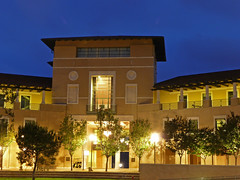
Soka - Night Ikeda LibraryThere were quite a few papers at ASPAC this year which addressed Japan’s colonial and imperial relationships: my own discussion of migration as an aspect of modernity notes that imperialism — which is clearly a component of modernity, one way or the other — depends heavily on migration for its success.1 The ones I want to highlight were about Korea, Okinawa and Hokkaido.
Continue reading →


  1. I’ll talk more about my own paper at some point, perhaps. For now I’ll just say that one of the great things about a generalist conference like ASPAC is that, even though my paper was the misfit on a panel of post-cold-war political science projects, the audience was diverse enough in interests and specialities that I got some nice comments anyway, especially after.  

Louis Vuitton and Roast Duck Meat

Currently, the Hong Kong Art Museum is showing an exhibit of art either created or sponsored by Louis Vuitton. For those moving through Hong Kong in the next few weeks, this is a great showcase of local Hong Kong artists and a fascinating history of the Louis Vuitton company (including a rather colorful animated film by Takashi Murakami).

One of the exhibits by local Hong Kong artist Adrian Wong was based upon the annals of the Emerald Jade Roast Meat Society, a revolutionary society based in Southern China at the turn of the 20th century which was heavily involved in the revolution of 1911 and the attempts leading up to it. They were also involved in the making of Hong Kong’s first movie, Stealing a Roast Duck. According to the exhibit, members of the Roast Meat Society helped create this film and filled it with secret revolutionary messages meant for Chinese expatriate recipients in San Francisco, where the film was meant to be shown, thus spreading information about the revolution across the Pacific. We have very little information of the film today, as it was lost on its way to San Francisco, and the only information we have about the film at all are accounts of the few who actually saw it.

The exhibit raises some interesting questions, however. First of all, assuming that this movie did exist, and it contained said secret messages, one might wonder how common these sort of trans-pacific message relaying was. We all know Sun Yat Sen was abroad more often than he was in China leading up to the revolution, but what was the role of these expatriates? Was there a lot of this secret message relaying going on? It also demonstrates the importance of movies in creating history, something I think we all too often ignore.

And to bring this subject more to the present, I find it fascinating that a local artist dug up this past fact and used it to explore the importance of Hong Kong today. I find that the Hong Kong museum of art recently has showcased a lot of local artists attempting to explore what it means to be a “Hong Konger.” And unlike a lot of local mainland artists, much of their art is filled with pride and nostalgia. In this Louis Vuitton exhibit alone, there was an installation piece that was a recreation of an old Hong Kong apartment, and an exhibit by Doris Wong of impressionist paintings of Hong Kong landmarks. What Adrian Wong is doing, in essence, is demonstrating Hong Kong’s role in the revolution (as the film was produced in Hong Kong and the society was founded in Hong Kong) in a very prideful kind of way (the exhibit, for those who are interested, include animatronic talking ducks).  I think this exhibit, including many that come through the HK Art Museum, are worth looking at because they explore this often forgotten cultural pride that Hong Kongers have about themselves, and a defensive attitude against the common opinion that it is a “cultural wasteland.”

ASPAC Blogging: Change in Rural China

Flowers of Soka - Pink LotusI heard a few China papers at ASPAC and, though they weren’t all on one panel, they might well have been, because they all dealt with the rural response to changing 20th and 21st century circumstances.

On Friday I heard Soka University’s own Xiaoxing Liu discuss rural responses to the marketization of the labor and agricultural economy in China over the last few decades. She noted that the share of Chinese workers involved in agriculture dropped below 50% in 2003, a critical landmark for modernization theorists: many former agricultural workers have become migrant laborers (more about them below) and the remaining agriculturalists have a great deal of structural and economic trouble: lack of land rights being high on the list. Continue reading →

Mastodon